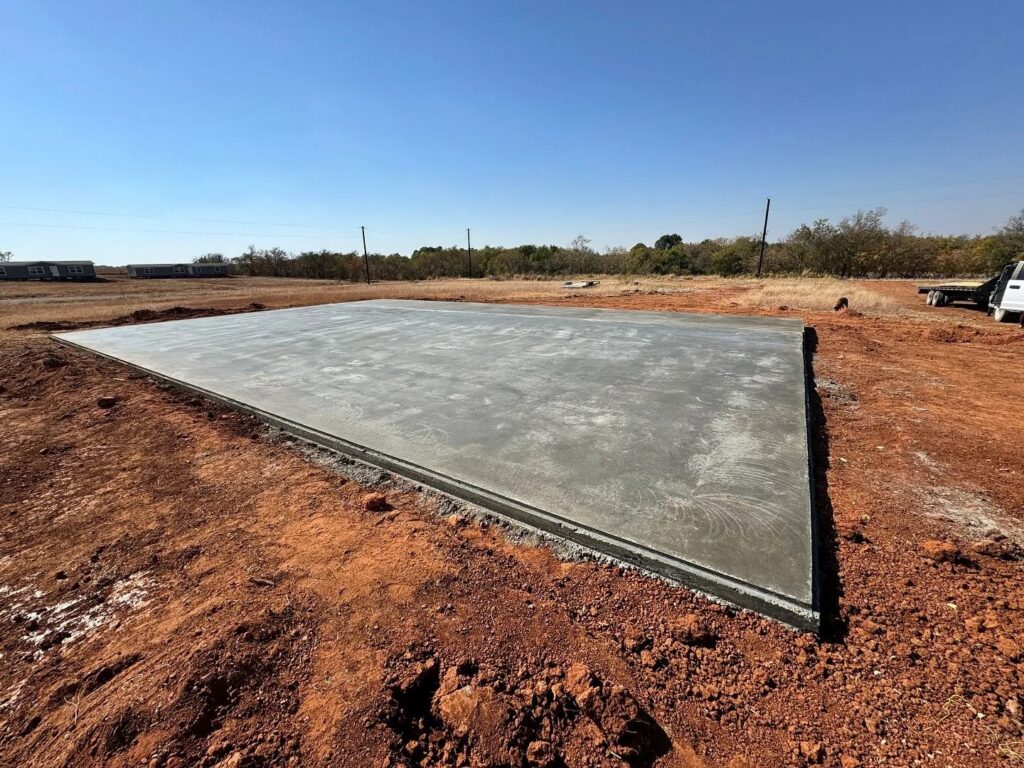

Top-Rated Concrete Flatwork Specialists in Tulsa, OK

Liberty Concrete provides garage slabs, shop floors, equipment pads, dumpster pads, and structural concrete flatwork engineered for load-bearing performance across Tulsa, Bixby, Owasso, Broken Arrow, and Jenks.

Load-Bearing Concrete Flatwork Built for Real-World Use

Flatwork is the concrete category that has to earn its living every day. Unlike decorative concrete or foundations that get poured once and forgotten, flatwork gets used, driven on, worked on, and pushed to its limits daily. Garage slabs handle vehicle weight and dropped tools. Shop floors take equipment loads, chemical exposure, and heavy foot traffic. Dumpster pads absorb impact from waste trucks. Storage building slabs support inventory and machinery.

At Liberty Concrete, we’ve spent over a decade pouring concrete flatwork across the Tulsa metro that stands up to what real users actually put it through. We use appropriate mix designs, correct thickness specifications, proper reinforcement, and finishing techniques matched to each slab’s intended use. The result is flatwork that performs for decades instead of failing within a few years.

Every flatwork project starts with an on-site evaluation and a written estimate that reflects the actual conditions and requirements of the space, not a template pulled off a shelf.

Types of Concrete Flatwork Liberty Concrete Pours

Garage Slabs

Residential and commercial garage floors poured to handle vehicle weight, tool storage, and daily wear. We install standard broom-finished garage slabs and upgraded finishes for shop-style garages.

Shop and Workshop Floors

Detached workshops, home shops, hobby buildings, and small business shops all need flatwork engineered for the equipment and use case. Thicker slabs, proper reinforcement, and appropriate finishing techniques create shop floors that stand up to real work.

Equipment Pads

Pads for HVAC condensers, generators, mini-split units, propane tanks, hot tubs, sheds, and other outdoor equipment. Properly sized and reinforced pads prevent settling and shifting over time.

Dumpster and Trash Pads

Commercial dumpster pads and residential trash enclosure pads take repeated impact from waste trucks and heavy containers. We build these with thicker slabs, additional reinforcement, and proper joint placement to handle the loading.

Storage Building and Shed Slabs

Slabs for detached storage buildings, sheds, and outbuildings sized to the structure and intended use. Includes proper moisture barrier and base preparation.

Home Addition Slabs

Room addition slabs, sunroom pads, and accessory dwelling unit foundations. We tie new slabs into existing structures with proper technique to prevent settlement issues.

Commercial Flatwork

Warehouse floors, loading dock slabs, industrial equipment pads, and heavy-duty commercial flatwork poured to commercial code requirements with the engineered specifications those projects demand.

Structural Slabs

Load-bearing structural slabs for specialty applications, including elevated slabs, thickened-edge slabs, and slabs engineered for specific structural loads.

How We Pour Concrete Flatwork

Free Site Consultation and Load Assessment

We visit the site to evaluate conditions, take measurements, discuss the intended use of the flatwork, and identify any specific load or exposure requirements. For commercial and specialty projects, we coordinate with your project manager or engineer.

Written Estimate and Scheduling

You receive a detailed written estimate covering thickness, reinforcement specifications, mix design, timeline, and total cost. We handle any required permits and coordinate scheduling around your project needs.

Demolition, Grading, and Base Preparation

For replacement projects, we handle demolition and disposal of existing flatwork. Site preparation includes proper subgrade compaction, moisture barrier installation, gravel base placement, and form setting to slab specifications.

Reinforcement, Pour, and Finishing

Rebar or wire mesh reinforcement is placed to specifications. Concrete is poured using the appropriate mix design for the application, then finished based on intended use, whether that's a broom-finished garage floor or a hard-troweled shop surface. Control joints are cut at correct intervals.

Curing and Final Handoff

Flatwork requires proper curing time before use. Most slabs accept light foot traffic in 24 to 48 hours, vehicle traffic after 7 days, and reach full strength in 28 days. We walk through the finished work with you and provide guidance on any project-specific curing considerations.

Flatwork Installation Throughout the Tulsa Metro

Flatwork projects range from simple residential garage slabs to complex commercial applications, and every city we serve has its own mix of typical flatwork needs.

  • Concrete Flatwork Contractor in Tulsa, OK
  • Concrete Flatwork Contractor in Bixby, OK
  • Concrete Flatwork Contractor in Owasso, OK
  • Concrete Flatwork Contractor in Broken Arrow, OK
  • Concrete Flatwork Contractor in Jenks, OK
  • Concrete Flatwork Contractor in Sand Springs, OK
  • Concrete Flatwork Contractor in Glenpool, OK
  • Concrete Flatwork Contractor in Catoosa, OK

Tulsa Concrete Flatwork FAQs

Concrete flatwork costs in Tulsa typically range from $6 to $28 per square foot depending on the application. Basic residential garage slabs run $6 to $10 per square foot, shop floors range from $9 to $15 per square foot, and heavy-duty commercial flatwork can reach $28 or more per square foot. We provide free written estimates so you know your exact project cost.

Slab thickness depends on the intended use. Residential garage slabs are typically 4 inches, shop floors 5 to 6 inches, dumpster pads 6 to 8 inches, and heavy commercial or industrial slabs often 8 inches or more. We recommend the correct thickness during your estimate based on what will actually be used on the slab.

Most residential flatwork projects are completed in 2 to 4 days from site prep through initial cure. Larger commercial or shop floor projects may take 5 to 10 days. Full strength curing typically requires 28 days, but the slab is usable for light traffic much sooner.

Light foot traffic is safe after 24 to 48 hours. Vehicle traffic can begin after 7 days. Heavy equipment or loads should wait 14 to 28 days depending on the mix design and application. We’ll give you specific guidance for your project.

Yes. We handle full garage slab demolition, removal, and replacement. This is common for older garages with cracked or heaved slabs, or homeowners upgrading to a thicker or reinforced slab.

Standard residential flatwork typically uses either wire mesh or fiber mesh reinforcement. Commercial, heavy-duty, or thicker slabs typically use rebar on a grid pattern, sometimes combined with fiber mesh. Reinforcement type and specifications are matched to the application.

Yes, with proper precautions. Cold weather flatwork requires temperature monitoring, curing blankets, appropriate mix additives, and careful timing. We can pour in winter months when needed but advise clients on the added considerations and any timeline impacts.

Yes. Flatwork poured adjacent to existing buildings, foundations, or pavement requires specific technique to allow for expansion and prevent damage to existing structures. We handle this regularly on addition projects and site expansions.

Yes. Commercial dumpster pads, equipment pads, and utility pads are common flatwork projects for us. We pour to commercial code requirements with the reinforcement and thickness needed for the loads involved.

For larger residential and commercial flatwork projects, yes. We offer flexible financing options as part of larger property improvement projects.

Get a Free Concrete Flatwork Estimate Today

Whether you need a new garage slab, a workshop floor, an equipment pad, a commercial slab, or any other flatwork project, Liberty Concrete brings over a decade of Tulsa experience and application-specific engineering to every pour.

Call (918) 500-4341 or fill out the form below to schedule your free estimate.