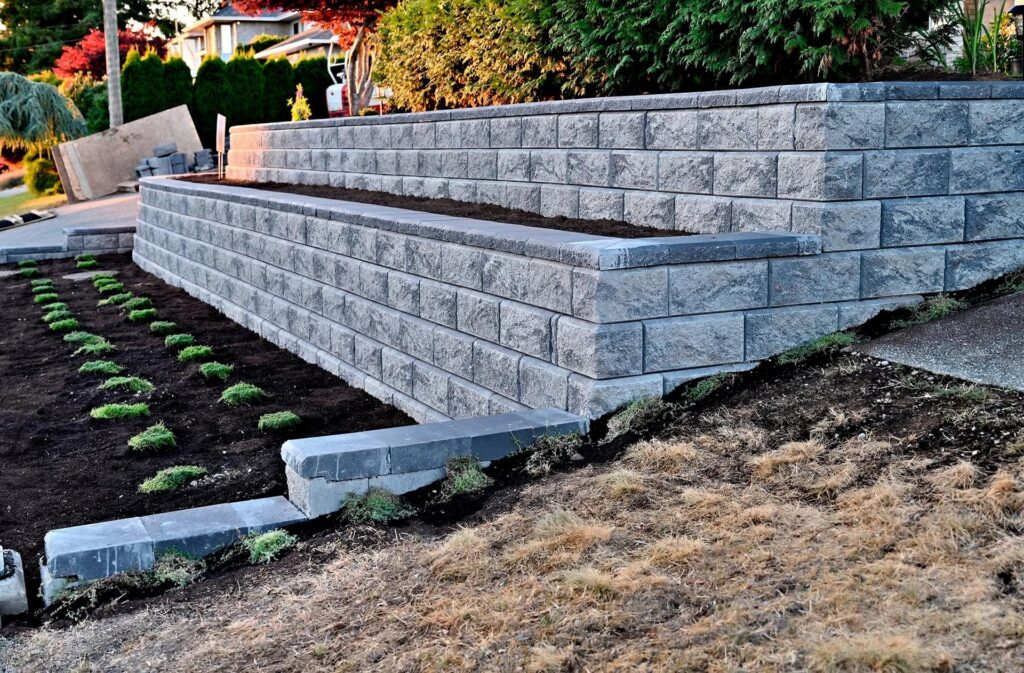

Liberty Concrete engineers and builds retaining walls that hold back hillsides, control erosion, and reshape grade changes across Tulsa, South Tulsa, and the surrounding metro. Poured concrete, block systems, and structural wall construction built for Oklahoma soil.

Tulsa Concrete Retaining Wall Construction

A retaining wall holds back thousands of pounds of soil, water, and lateral pressure. When a retaining wall fails, the consequences range from damaged landscaping to compromised foundations to full hillside collapse. Tulsa’s rolling terrain, expansive clay soil, and seasonal rainfall put retaining walls under constant stress, which means the difference between a wall that lasts 50 years and one that fails in 5 comes down to engineering, materials, and installation technique.

Liberty Concrete has built retaining walls across Tulsa since 2014. Liberty Concrete constructs poured concrete walls for structural applications, concrete block and modular walls for landscape grade changes, and engineered wall systems for the hillside properties common across South Tulsa and the surrounding metro. Project work covers residential, commercial, and HOA applications wherever Tulsa terrain demands grade control.

Every retaining wall project begins with a free on-site evaluation. A Liberty Concrete team member assesses the site, measures grade changes, discusses structural requirements, and provides a written estimate reflecting the engineering the specific project demands.

Retaining Wall Systems Liberty Concrete Builds Across Tulsa, OK

Poured Concrete Retaining Walls
Reinforced poured concrete walls deliver the highest strength and longest service life of any retaining wall type. These walls work for structural applications, heavy loads, tall grade changes, and permanent installations. Poured walls require formwork, rebar engineering, and precise concrete specification. Liberty Concrete builds poured retaining walls for commercial applications, structural residential grade changes, and any project where long-term performance justifies the investment.

Concrete Block Retaining Walls
Modular concrete block walls, including segmental retaining wall systems, provide excellent performance for landscape grade changes up to 4 feet without engineering stamps. These walls allow curved layouts, decorative appearances, and faster installation than poured concrete at lower cost. Common applications include landscape terracing, raised garden beds, driveway edging, and yard separation.

Engineered Retaining Walls
Walls taller than 4 feet typically require engineering, soil reports, and permits in most Tulsa jurisdictions. Liberty Concrete coordinates with structural engineers on engineered wall specifications, handles the permit process, and builds walls to the engineered plans. Common applications include hillside stabilization, foundation protection, and commercial grade changes.

Decorative and Landscape Retaining Walls
Walls that serve both structural and aesthetic purposes. Options include stone-faced concrete walls, stamped concrete walls that mimic natural stone, and decorative block systems in a range of colors and textures. Decorative retaining walls appear frequently in upscale residential landscaping across South Tulsa and Jenks.

Driveway and Entry Retaining Walls
Walls that create level driveway access on sloped lots, retain soil along driveway edges, and shape entry grade changes. Driveway retaining walls often integrate with hardscape, lighting, and landscape features for upscale residential properties.

Erosion Control Walls
Walls built specifically to control soil loss on sloped properties. These walls combine retention with drainage design to protect downhill structures, landscaping, and property boundaries. Common for properties backing to drainage easements, creek beds, and natural slopes.

Retaining Wall Repair and Replacement
Existing walls that have begun to fail from inadequate engineering, poor drainage, or age receive full assessment. Some walls can be repaired with reinforcement and drainage additions. Others require full demolition and replacement. Liberty Concrete provides honest written assessments covering both options when applicable.

The Liberty Concrete Retaining Wall Construction Process

Site Assessment and Structural Evaluation

A Liberty Concrete team member walks the site, measures grade changes, assesses soil conditions, identifies drainage considerations, and evaluates surcharge loads from above the proposed wall. For walls that may require engineering, we identify that early so the project timeline reflects engineering lead time.

Written Estimate With Engineering Coordination

The property owner receives a detailed written estimate covering wall type, dimensions, drainage design, reinforcement specifications, timeline, and total cost. For engineered walls, we coordinate with structural engineers and reflect engineering fees in the estimate.

Permits, Engineering, and Project Scheduling

Walls requiring permits receive full coordination with the Tulsa permit office. Engineered walls receive engineer-stamped plans before construction begins. Scheduling accounts for engineering review time, permit approval, and weather considerations.

Excavation, Base Preparation, and Drainage Installation

Site crews excavate to proper depth, prepare base with compacted gravel, install drainage pipe where required, place drainage aggregate behind the wall footprint, and set forms or lay the first course depending on wall type.

Wall Construction, Backfill, and Final Walkthrough

Walls get built to engineered specifications with proper reinforcement, drainage integration, and backfill compaction behind the wall. The final walkthrough covers maintenance recommendations, drainage system access, and any landscape integration considerations.

Three Local Conditions That Create Retaining Wall Demand in Tulsa, OK

Retaining wall work is driven by terrain, soil, and water. Tulsa delivers all three in ways that generate steady demand:

Rolling Terrain Across the South Tulsa Housing Market

South Tulsa, Jenks, and the metro’s southern expansion sit on terrain that rolls, slopes, and changes grade across most residential lots. Properties on hillside parcels require retaining walls to create usable yard space, protect foundations from lateral soil pressure, and separate elevation changes between neighboring properties. The Jenks and South Tulsa housing boom has driven substantial retaining wall demand across the past two decades.

Expansive Clay Soil Pushes Against Weak Walls

Tulsa clay soil behaves aggressively. Soil swells with spring rainfall. Soil shrinks during summer droughts. Walls built without proper drainage, reinforcement, and base preparation get pushed over by lateral soil pressure within a few years. Poured concrete and properly reinforced block walls handle this pressure. Shortcut installations don’t.

Seasonal Rainfall Creates Erosion and Hydrostatic Pressure

Tulsa receives roughly 42 inches of rainfall per year, with concentrated spring storms that drive significant surface runoff. Properties on sloped land experience ongoing soil erosion without retention. Walls near low areas face hydrostatic pressure from groundwater, which requires drainage integration most contractors underestimate. Liberty Concrete engineers drainage into every wall we build.

Cities Where You Can Hire Liberty Concrete for Retaining Wall Construction

Liberty Concrete builds poured concrete retaining walls, segmental block walls, and engineered hillside walls across the Tulsa metro. Each city listed below sits within our daily service area. Our team handles the local terrain, soil conditions, and permit requirements specific to each community.

Retaining Wall Contractor in Tulsa, OK
Retaining Wall Contractor in Bixby, OK
Retaining Wall Contractor in Owasso, OK
Retaining Wall Contractor in Broken Arrow, OK
Retaining Wall Contractor in Jenks, OK
Retaining Wall Contractor in Sand Springs, OK
Retaining Wall Contractor in Glenpool, OK
Retaining Wall Contractor in Catoosa, OK

Tulsa Retaining Wall Construction FAQs

Retaining wall costs in Tulsa vary significantly based on wall type, height, engineering requirements, drainage design, and site conditions. Segmental block walls, poured concrete walls, and engineered walls over 4 feet each carry different pricing based on materials and labor. Rather than publish generic numbers that may not reflect your specific project, Liberty Concrete provides a detailed written estimate after a free on-site evaluation. Call (918) 500-4341 to schedule yours.

Walls over 4 feet in height typically require permits and engineering in Tulsa jurisdictions. Walls between 2 and 4 feet may require permits depending on surcharge loads and site conditions. Our team verifies permit requirements before every project and handles permit coordination when required.

Wall type depends on height, load requirements, aesthetic goals, and budget. Segmental concrete block walls work well for landscape grade changes under 4 feet. Poured concrete walls deliver maximum strength for structural applications and taller walls. During the free consultation, we evaluate your specific site and recommend wall type based on actual conditions.

Typical residential retaining wall projects complete in 5 to 14 days depending on length, height, and complexity. Larger engineered walls or walls requiring extensive drainage integration may take 2 to 4 weeks. Walls requiring engineering add 2 to 4 weeks for engineering review before construction begins.

Yes. Every retaining wall needs drainage integration to prevent hydrostatic pressure buildup behind the wall. Drainage design includes gravel backfill, drainage pipe at the wall base for most applications, and weep holes on applicable wall types. Walls built without proper drainage fail within a few years. Liberty Concrete engineers drainage into every wall we build.

Yes. Hillside wall construction is one of our specialty applications, particularly across South Tulsa and Jenks where terrain demands significant grade control. Hillside walls often require engineering, drainage design, and site access planning. We handle all of that as part of the project.

Most retaining wall failures trace to inadequate drainage, improper base preparation, insufficient reinforcement, or shortcuts on wall height versus engineering requirements. Walls built without engineering for height, soil load, and drainage fail. Walls built correctly last decades.

Yes. Stone-faced walls, stamped concrete walls, and decorative block systems are common upgrades for residential projects. Decorative walls deliver structural performance along with visual appearance that integrates with landscape design.

Depends on the wall. Walls with minor issues like drainage problems or small cracks often respond to targeted repair and drainage additions. Walls with structural failure, significant leaning, or inadequate base preparation typically require replacement. Our team provides honest written assessments covering both options when applicable.

Yes. Larger retaining wall projects, particularly engineered walls and hillside stabilization work, qualify for flexible financing options.

Request Your Free Retaining Wall Estimate From Liberty Concrete

Whether the project involves stabilizing a hillside in South Tulsa, retaining a terraced landscape in Jenks, protecting a foundation from lateral soil pressure, or building a decorative wall that completes an upscale residential design, Liberty Concrete brings over a decade of engineering-first retaining wall experience to every project.